
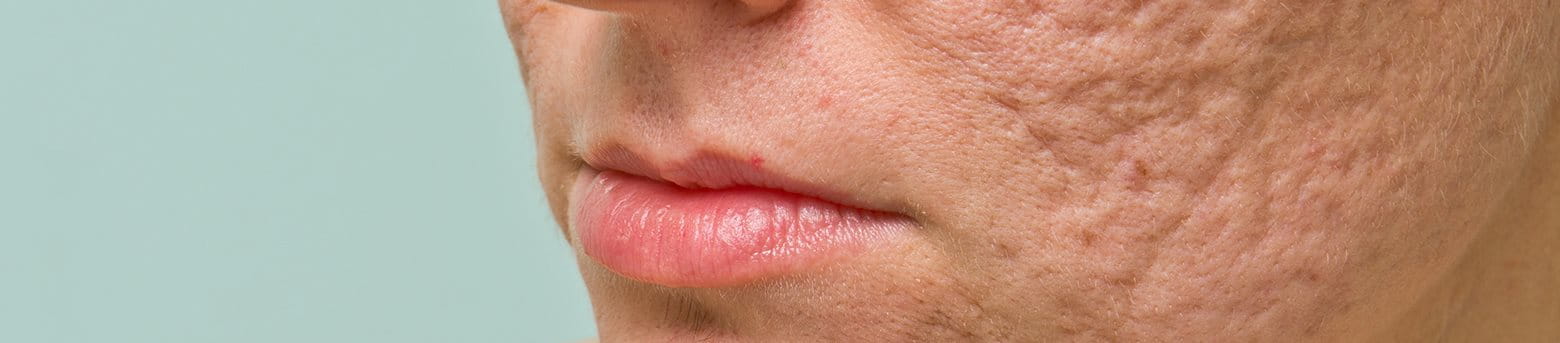
Close up image of acne scarring

How to get rid of acne scars and reduce their appearance

8 min read
Show more
Living with acne can be difficult, but for many, the problems continue after the papules and pustules have cleared up. Acne can leave skin marked and scarred, and if someone has experienced severe acne, the scarring can be equally severe and distressing.

Thankfully, several options are available for tackling these scars, but the best treatment is undoubtedly prevention—i.e., not getting the scars in the first place. If you are suffering from acute acne, we recommend consulting a dermatologist as soon as possible. They can recommend a treatment to alleviate your acne, so scar formation can largely be avoided. 

You can find out which symptoms should prompt you to see a doctor and what he or she will then do here.

What causes acne scars

Undoubtedly, the most noticeable and severe consequence of acne is scarring, but it can also leave other marks, such as pimple marks caused by post-inflammatory hyperpigmentation (PIH). Learn more about how to reduce and remove these marks from acne and hyperpigmentation.

Try to resist the temptation to fiddle with blackheads, whiteheads, and other blemishes, either with your fingers or other implements.
It’s when you squeeze blemishes too hard (especially those that have not yet fully formed) that you can damage the fine veins, glands, and tissues that surround them.
This can worsen acne symptoms and increase the risk of scarring. Scars form when the outermost layer of skin, the epidermis, is damaged and the deeper layers are also affected.

Skin cannot regenerate exactly as it was, so the wound is replaced by granulation tissue, which is made up of collagen fibers. These fibers fill the wound from the inside out and help heal the damaged skin. This replacement tissue may heal the injury, but can also remain visible.

Certain factors can also increase the chances of developing acne scars or increasing their appearance, for example:

Genetics: If your parents had acne when they were younger, you may be more likely to develop acne.

Sun exposure: Sun exposure triggers the production of melanin in the skin, which can make acne scars darker and more noticeable.

Puberty: One side effect of the hormonal changes our bodies go through during puberty is acne. Picking at blemishes can leave scars; however, if acne is severe, scars may remain even if it is left untouched.

Gender: While both men and women can develop acne, men tend to develop more severe acne due to the hormone androgen.

Types of acne scars

There are several different types of acne scars. The following are those most closely associated with acne:

Atrophic scars

These are pitted or sunken scars and are sometimes referred to as 'ice pick scars'. They develop when a wound does not heal properly and too little binding tissue forms. The scar then develops beneath the surrounding tissue, creating a small, visible indentation (dimple).

Hypertrophic scars

You can recognize hypertrophic scars by the raised scar tissue. Where there was previously an inflamed blemish, the skin produces ‘inferior’ tissue. This tissue doesn’t have the same structure as healthy tissue, so it becomes thicker and sits above the surrounding skin.

Keloids

When a hypertrophic scar continues to grow and spreads into surrounding skin, it is called a keloid. Keloid scars are raised and reddish-purple when new, but they fade over time. This form of scar is only occasionally caused by acne; it is more commonly associated with burns.

How to prevent acne scars

The best way to prevent acne scars is to avoid picking or damaging the skin while the acne inflammation is still active; however, for some acne sufferers, this is easier said than done. In severe cases, inflammation itself may still leave scarring behind.

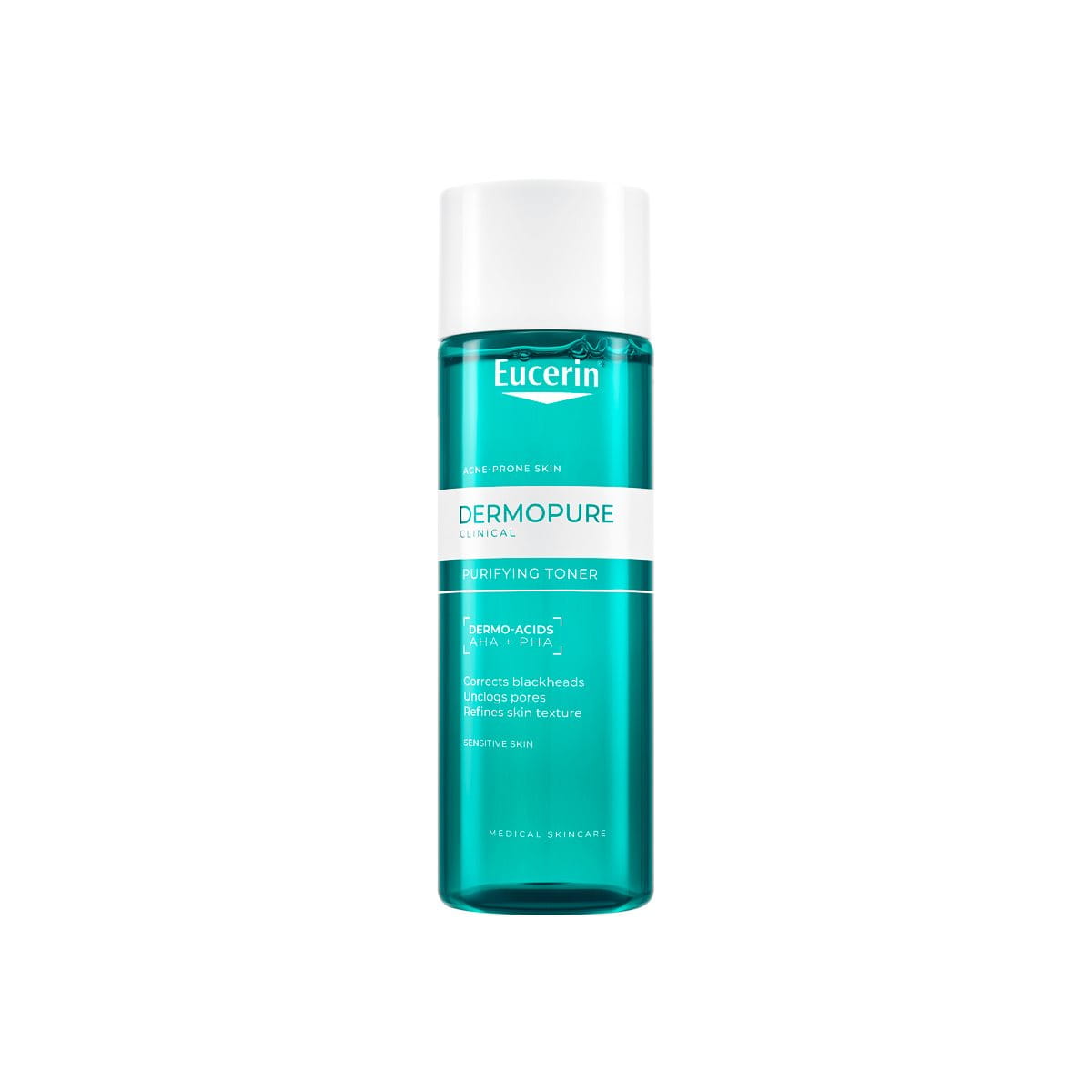
Another way to reduce acne scarring is to treat acne as soon as it develops in order to reduce inflammation. We recommend using the Eucerin DermoPure range, which uses scientifically tested ingredients to treat the root causes of acne, and following a skincare routine for acne-prone skin.

Acne Scar Treatment

Sadly, scars can't be removed completely, but they can be significantly reduced and made much less noticeable. Your skin may also improve over the years. 

If you decide your scars need treatment, several options are available. The right option for you will depend on the nature, size, and form of your scarring. Discuss invasive treatments with your doctor, and don't start any treatment until your acne has completely healed.

Eucerin DermoPure Clinical Triple Action Serum, with patented Thiamidol, reduces post-acne marks and blemishes and controls shine. Visible results in 2 weeks, with continuous improvement over time. Efficacy is enhanced when used with DermoPurifyer Protective Fluid SPF 30.

Laser treatment for acne scars

With laser therapy, the skin is injured in a targeted way so as to activate its natural self-healing process. Once the skin is renewed, the complexion appears smoother. A wide range of laser variants is available, and this treatment should be performed only by an experienced dermatologist to avoid injuring the surrounding skin. Unfortunately, again, multiple sessions are required for visible, long-lasting results.

Microneedling for acne scars

Devices are available for home use, but microneedling is best and safest when performed by a dermatologist or beautician to reduce the risk of further inflammation.

Facial skin is treated with a dermaroller. A dermaroller is a device fitted with numerous fine needles no more than 0.5 mm in length. These needles pierce the top layer of the skin, sending a signal that an injury needs to be repaired. Skin responds by releasing more Collagen, elastin, and Hyaluronic Acid, and in just a short time, skin can appear tighter, younger, and fresher

Chemical peels for acne scars

Specialists (dermatologists and/or beauticians) can treat acne scars with peels. They use fruit acids, Salicylic Acid, or trichloroacetic acid (TCA) in varying concentrations to remove the outermost layers of skin. As the skin heals, scars may be less visible, and your complexion may look smoother and more even overall. 

Microdermabrasion for acne scars

This is a relatively gentle form of dermabrasion in which the upper layers of the skin are removed mechanically using small crystals. The treatment has a positive effect on the complexion and is suitable for dry skin, large pores, or other scars too.

Microdermabrasion is pain-free and is usually carried out by a beautician. You’ll need regular treatments to achieve effective, lasting results.

Fruit acids for acne scars

Fruit acids are frequently used to treat skin marked or scarred by acne. Milder concentrations (up to 12%) are available for home use, while beauticians can use concentrations up to 40% and dermatologists up to 70%. Your dermatologist can advise on the most appropriate concentration for your skin. Several peels are normally required before results are noticeable.

N.B. Skin can be very sensitive after a chemical and/or fruit acid peel, so avoid direct sunlight (and solariums) and apply a high sun protection factor, such as Eucerin Sun Gel-Cream Oil Control SPF 50+.

Retinol

Retinol is a popular ingredient used in skincare products and treatments. It increases the turnover rate of skin cells while reducing oil production, making it effective not only for treating acne but also for minimizing the appearance of acne scars. Retinol molecules are very small, allowing them to penetrate the middle layer of skin and stimulate collagen production, which helps plump the skin. Additionally, increased cell turnover can result in a more even skin tone.

Nevertheless, retinol must be introduced gradually to prevent irritation or skin purging. Start by using a gentle formula once a week, then increase frequency after two weeks to twice a week, then three times a week, and so on.
If none of the above treatments have been effective, contact your dermatologist for expert advice.

How do acne scars affect skin health?

An acne scar differs from the surrounding skin in the way it looks and behaves. 

Oil and sweat glands cannot regenerate in scar tissue, and hair cannot grow on it. Scar tissue also has fewer elastic fibers, so skin often looks and feels harder. Circulation and moisturization are also compromised in scar tissue, making it harder for scarred skin to maintain the levels of hydration it needs, and it can dry out.

How long does it take for acne scars to fade?

Acne scars won't disappear entirely on their own, but treatment can reduce them. How long they take to fade depends on the type of acne scar, as described above.

Post-inflammatory hyperpigmentation or redness usually takes anywhere from two months to two years to fade, so patience will be required. To help prevent acne scarring, you should use Eucerin acne products to reduce breakouts.

Complete the routine

Related articles

Our brand values

Pioneers in skincare

We deliver a holistic dermo-cosmetic approach to protect your skin, keep it healthy and radiant.

Committed to innovation

For over 100 years, we have dedicated ourselves to researching and innovating in the field of skin science. We believe in creating active ingredients and soothing formulas with high tolerability that work to help you live your life better each day.

Recommended by dermatologists

We work together with leading dermatologist and pharmacist partners around the world to create innovative and effective skincare products they can trust and recommend.